


10 beginner quilting tools & notions: What you need to get started
- Mar 22, 2022
- 6 min read
Updated: Sep 23, 2024
Starting your quilting journey can be exciting, but figuring out what tools you really need can be confusing. The good news is, you don’t need a ton of fancy or expensive equipment to get started! In this guide, we’ll go over 10 basic quilting tools and notions perfect for beginners. These essentials will help you start quilting with confidence, without breaking the bank. Whether you're picking up a rotary cutter for the first time or just want to know what’s truly necessary, this list will guide you through the must-haves to get started on your first project!
1. Sewing machine
This one almost goes without saying, but unless you want to spend hours hand-stitching all of your quilts, you’ll need a sewing machine.
There are uber-fancy, and uber-expensive, high-end machines made specifically for quilters on the market – but you don’t need that kind of machine to start creating beautiful quilts. A simple, basic, affordable sewing machine that can sew a quality straight stitch is really all you need.
If you plan on making large quilts, you’ll also want to make sure that the machine you choose has a large throat space to accommodate lots of fabric. It’s no fun when you can’t get to the center of your quilt due to limited space in your sewing machine!
2. Fabric
Every quilter – and every quilt – needs fabric! Over time, you’ll build a collection of fabrics that you love, but when you’re getting started it can be hard to decide which fabrics are worth purchasing and how much you’ll need of each.
I want to quell that anxiety and tell you that choosing fabric doesn’t have to be complicated! You can use any quilting cotton from any fabric or crafting store. There’s no need to look for specific brands or quality levels of fabric. Also, many fabric stores carry pre-cut pieces of quilting cotton and even bundles of fabric in complementary colors to make your decision even easier!
Once you’ve got a few quilts under your belt, you can experiment with different fabric manufacturers and color combinations to find your favorites.
3. Thread
Thread is the only thing holding a quilt together, quite literally. Because of this, choosing a quality thread is essential – especially for an item like a quilt that may receive a lot of wear and tear.
There are two primary thread choices when it comes to quilting: polyester thread and cotton thread.
Cotton thread is made from cotton, which is a natural fiber. This type of thread has a more textured look and a matte finish. It’s also usually a bit more expensive than polyester.
Polyester thread is made from polyester, which is a synthetic, man-made fiber. It also tends to have a bit of a sheen, meaning it will catch the light and have a somewhat reflective look.
For quilting, the best choice is usually 100% cotton thread, especially for piecing. The matte finish will allow it to blend into quilt better. In addition, since the fabric in a quilt is also cotton, cotton thread will wear at a similar rate to the fabric.
I use Aurifil 50 weight for all of my piecing. I find that it’s strong yet thin enough to avoid any extra bulk in my seams.

4. Seam ripper
We all hope we won’t need it, but a seam ripper is a must-have for quilting! Mistakes happen, and there will inevitably come a time (in almost every project) where you’ll need to unsew a section of stitching. A seam ripper is the tool for the job!
If you try to remove stitching with scissors or thread snips, you’re likely to accidentally cut or mar the fabric. A seam ripper will allow you to remove stitching quickly and without damaging your fabric.
5. Pins
Pins will be one of the most-used items in your sewing space as a quilter. Pins help you to hold each seam together precisely where you want it before taking it to your sewing machine. This will help you to get a perfectly pieced quilt with beautifully sharp intersection points.
I prefer these Clover Brand extra-fine patchwork pins or my new find, Taylor Seville Magic patchwork fine pins, I find that they don’t distort or move the fabric as I pin.


6. Rotary cutter
Almost half of the quilting process is cutting all the pieces to size! This means that you need an easy and efficient way to cut fabric. A rotary cutter makes cutting your pieces quick and it’s more precise than scissors. Trust me, you’ll want a rotary cutter, even as a beginner quilter! There are so many types of rotary cutters. You want to make sure that you are getting a well-known brand, to ensure the blades are sharp. You’ll also need extra blades as well. Make sure to change your blades regularly to ensure smooth cutting every time. I have a habit of changing mine every time I start a new project.
There are various sizes of rotary cutters as well. The universal size is typically a 45 mm rotary cutter. This will be perfect for sewing and quilting with quilt cottons. An 28 mm rotary cutter is perfect for those small cuts, when foundation paper piecing, or when cutting curves! A 60 mm rotary cutter can also be helpful for more control or when cutting more layers of fabric.


7. Cutting mat
To go with your rotary cutter, you’ll also need a cutting mat. You definitely don’t want to use your rotary cutter directly on your sewing table (or worse, your floor!). A self-healing cutting mat gives you a surface to lay your fabric on for cutting. You can then whip around the piece with your rotary cutter with no worries about slicing open your sewing table. Self-healing cutting mats are a bit on the spendy side but having one will make cutting the pieces of your quilt so much easier and faster! There are many sizes for rotary cutting mats, so my suggestion is usually to get the largest you can afford for your work table size. If you can’t afford to get a large mat right away, start with a smaller cutting mat that fits in your budget, then upgrade later. As you are able to purchase additional mats, having different sizes will become more helpful.


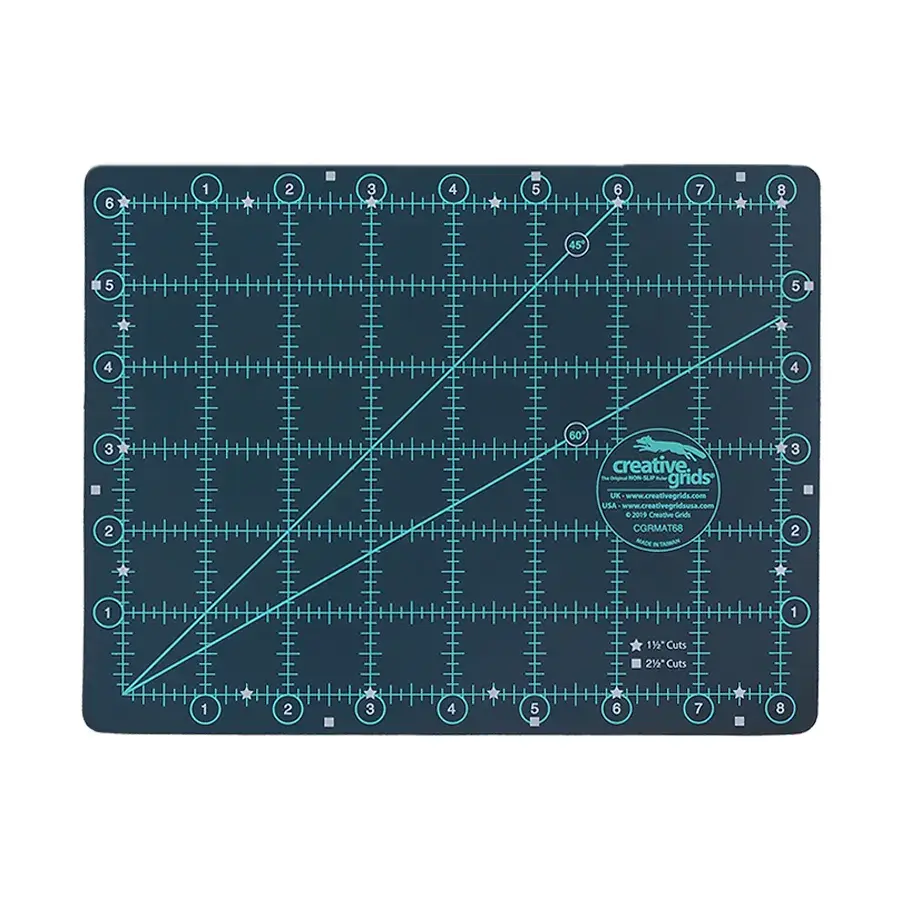
Also when you are ready, a rotating cutting mat can be so helpful! No more moving your fabric to cut it, just rotate the mat! This can ensure that your quilt blocks don't move or shift as you are trimming.

8. Scissors
Fabric scissors are a must-have for all kinds of sewing, including quilting. While you’ll likely use your rotary cutter for cutting all the pieces of your quilt, you’ll still need a good pair of fabric scissors for any cutting that comes up during the sewing process, such as clipping or trimming seam allowances.
You’ll also want a pair of thread snip scissors near your machine for cutting the thread tails away after sewing each seam.
9. Rulers
To cut all your pieces to the right sizes, you’ll need a good set of clear quilting rulers. Quilting rulers are awesome because they have a grid of different measurements and angles printed on them and are see-through for easy cutting of squares, rectangles, triangles, and more!
There are a ton of different quilting rulers available, but you only need a few versatile rulers to get started. I recommend a 6.5 x 24 inch rectangle, a 5 inch square, and a 10 inch square as your very first quilting rulers!


10. Iron & ironing board
Pressing is a huge part of the quilting process. Making good use of your iron is the only way to achieve a flat, professional-looking quilt.
If you have space for it, go for a large ironing board with enough height that you won’t be constantly hunched over it – we don’t want you getting any back problems from your quilting!
For your iron, choose one with a variety of temperature settings that can be used both with and without steam. An automatic shutoff after a certain amount of time is also great if you tend to forget to turn things off.
Once you’ve made a few quilts and know that you’re hooked for life on this new hobby, consider adding a smaller travel-sized iron to your sewing space. A small iron is great for pressing those fiddly seams while piecing. I love the Oliso mini project iron because it’s a perfect size for pressing blocks. It has a nice pointed tip and it heats up perfectly!

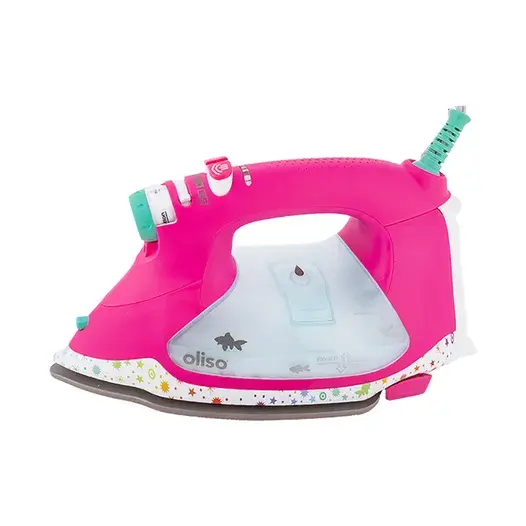
I hope these tips helped! Don't forget, there will be PLENTY of time to grow your collection of quilting tools and notions, and it will be easy to get addicted to all of the wonderful options on the market!
Is there something that you can't live without as a beginner? Drop me a comment below and let me know!
Affiliate Disclosure Policy: This website uses affiliate links, and I may earn a small commission if you purchase through these links. Please note that I’ve linked to these products purely because I recommend them and they are from companies I trust. There is no additional cost to you.


_jfif.jpg)


Comments